When Wrong Sounds Right
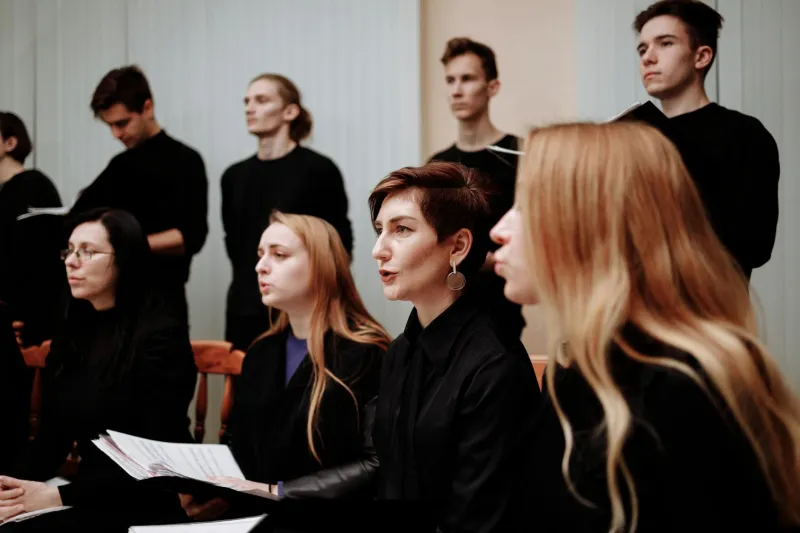
In a grotty rehearsal space above a chippy in Leeds, something beautiful is happening. It's the sound of musical rebellion—not the leather-jacket-and-power-chord kind, but something far more subversive. Here, a collective called Bent Frequencies are systematically destroying everything your GCSE music teacher ever told you about how instruments should sound.
"We started by accident, really," explains Sarah Chen, the group's de facto leader, as she adjusts the bizarre contraption that was once a perfectly respectable upright piano. "Someone dropped our keyboard down the stairs, knocked everything out of tune. Instead of fixing it, we started writing around it. Suddenly we were making music that existed in spaces between the notes."
This is the underground revolution happening in Britain's most unlikely corners—artists who've discovered that musical 'mistakes' might actually be doorways to entirely new sonic universes.
The Heretics of Harmony
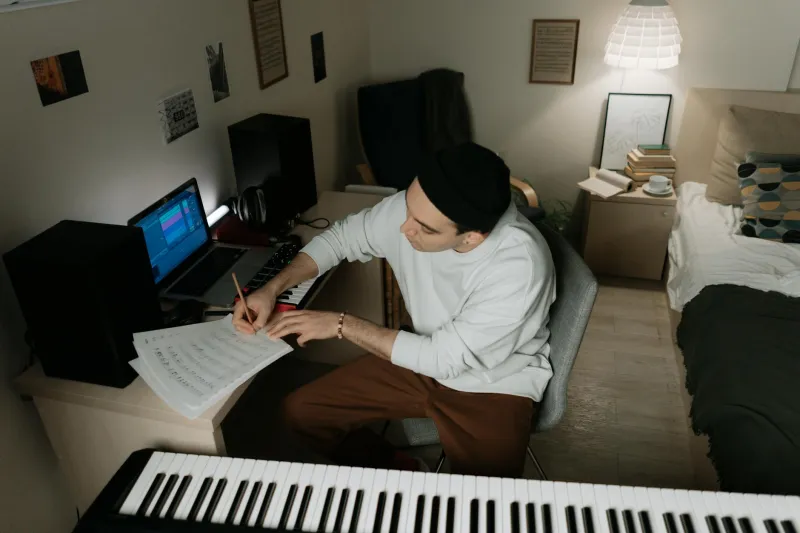
Across the country, a growing network of musicians are deliberately breaking the fundamental rules of Western music. In Birmingham, electronic artist Drone Therapy (real name Marcus Webb) has spent three years developing what he calls "impossible scales"—microtonal systems that divide octaves into 17, 23, or 31 notes instead of the traditional 12.
"Traditional tuning is basically musical colonialism," Webb argues from his cramped Digbeth studio, surrounded by keyboards modified beyond recognition. "We've convinced ourselves that 12-tone equal temperament is natural, but it's just one way of organising sound. There are infinite other ways."
His latest release, 'Frequency Crimes', recorded entirely in 23-tone equal temperament, sounds like ambient music from an alien civilisation. It's unsettling, hypnotic, and utterly compelling—the musical equivalent of looking at the world through kaleidoscope glasses.
Meanwhile, in a converted barn outside Norwich, the duo Scordatura are taking a more visceral approach. They've restrung every instrument they own—guitars tuned to impossible intervals, violins with fishing line instead of proper strings, even a harp restrung with bicycle brake cables.
"The point isn't to sound pretty," says violinist Emma Rodriguez, rosining a bow that's about to attack strings tuned to frequencies that would make Bach weep. "The point is to find sounds that don't exist anywhere else. When you break the rules, you discover there were never really rules at all—just habits."
Ancient Wisdom, Modern Madness
What these artists are rediscovering isn't actually new. Before the Western world settled on its current tuning system, musicians explored wildly different approaches to organising pitch. Harry Partch, the American maverick, built entire orchestras of microtonal instruments in the mid-20th century. But Britain's current crop of sonic heretics are taking these concepts and running them through distinctly British sensibilities—DIY ethics, sardonic humour, and a healthy disrespect for authority.
Take Glasgow's Detuned Collective, who perform monthly 'mistuning sessions' in various pubs around the city. Audience members bring instruments—any instruments—and spend the evening systematically detuning them according to instructions written on beer mats. The results are chaotic, often hilarious, and occasionally transcendent.
"We're not precious about it," laughs collective member Jamie Morrison. "If someone brings a melodica and tunes it to sound like a dying seagull, brilliant. If it sounds terrible, even better. We're documenting the beauty of musical failure."
Technology Meets Tradition
The digital revolution has made these experiments more accessible than ever. Software like Xenharmonic FMTS and various Max/MSP patches allow bedroom producers to explore tuning systems that would have required custom-built instruments just decades ago.
In her South London flat, producer Frequency Witch (who prefers to remain anonymous) creates what she calls "gravity music"—compositions where the tuning itself shifts throughout the piece, like musical continental drift.
"I treat pitch like weather," she explains, demonstrating software that makes her synthesizers drift slowly out of tune with themselves. "Instead of fixed notes, I've got climate systems. Sometimes it's stormy, sometimes it's calm, but it's always moving."
Her SoundCloud tracks have gained a cult following among listeners who describe the experience as "musical vertigo" and "like being inside a broken radio that's receiving signals from the future."
The Sound of Tomorrow
What makes Britain's microtonal movement particularly exciting is its lack of pretension. While academic institutions debate the theoretical implications of alternative tuning systems, these artists are simply getting on with making music that sounds like nothing else on earth.
"We're not trying to be clever," insists Bent Frequencies' Chen, as the collective prepares for their monthly residency at a Chapeltown community centre. "We just want to make sounds that surprise us. When you stop trying to be right, you discover that wrong can be absolutely gorgeous."
As Britain's music industry becomes increasingly homogenised, these sonic rebels offer something genuinely radical: the possibility that everything we think we know about music might be beautifully, brilliantly wrong. In their hands, musical mistakes become doorways to new worlds.
And in a culture that's spent centuries perfecting the art of being properly wrong about things, perhaps these artists have found the most British approach to musical rebellion of all—politely ignoring the rules and carrying on regardless.
Bent Frequencies perform monthly at the Chapeltown Community Centre, Leeds. Detuned Collective sessions happen every third Thursday at various Glasgow venues. Check their respective social media for details.