When Wrong Sounds So Right
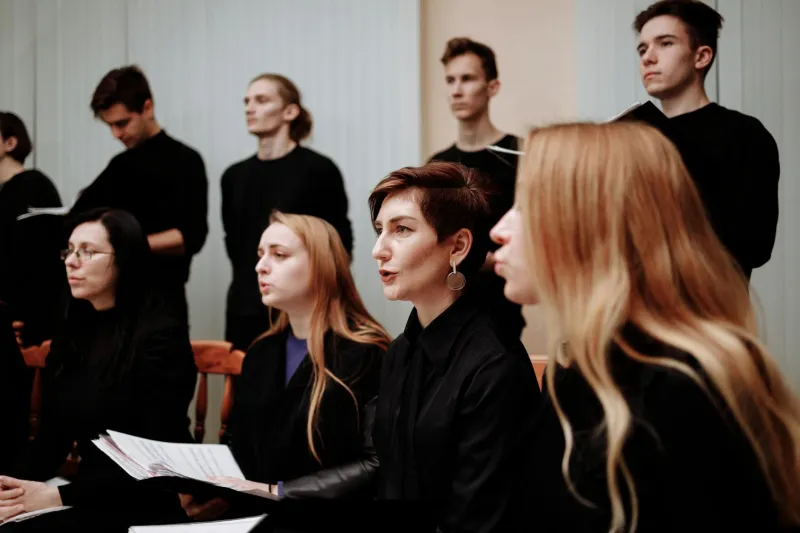
In a draughty community centre in Hackney, thirty-odd voices rise in what can only be described as a glorious cacophony. No sheet music in sight, no conductor waving a baton, just pure, unadulterated vocal chaos that somehow makes perfect sense. This isn't your nan's church choir – this is the Dissonance Collective, and they're part of a growing movement that's turned Britain's choral tradition completely on its head.
Welcome to the anti-choir revolution, where harmony is the enemy and beautiful discord reigns supreme.
The Great Vocal Uprising
Across the UK, from Manchester's industrial estates to Brighton's bohemian quarters, ordinary punters are gathering in unlikely venues to explore the outer limits of human vocal expression. These aren't trained singers or conservatory graduates – they're office workers, shop assistants, retired teachers, and students, all united by a shared desire to make sounds that would send traditional choirmasters running for the hills.
Take the Throat Chakra Collective in Birmingham, where participants spend two hours every Tuesday evening exploring Tuvan throat singing techniques whilst sipping tea from thermos flasks. Or Leeds' infamous Drone Zone, a vocal group that specialises in sustained, overlapping tones that can apparently induce altered states of consciousness (though that might just be the lack of oxygen).
"We're not trying to sound pretty," explains Sarah McKenzie, who founded the Manchester Howling Circle after a particularly soul-crushing experience with her local church choir. "We're trying to sound real. Raw. Human. Sometimes that means beautiful, sometimes it means absolutely mental – but it's always honest."
Beyond the Hymn Sheet
The traditional British choir has always been about conformity – matching pitch, following the conductor, staying within the lines of centuries-old compositions. But this new breed of vocal collective is having none of it. They're drawing inspiration from everywhere except the Anglican hymnal: Tibetan chanting, Bulgarian folk techniques, free jazz vocal improvisation, and even the industrial soundscapes of their own cities.
In Cornwall, the Penzance Overtone Orchestra meets monthly in a converted tin mine to explore the acoustic properties of the underground caverns. Their repertoire includes everything from medieval chants to experimental compositions based on the sound patterns of local seabirds. "The reverb down here is absolutely mental," says founding member Tom Pascoe. "You can't help but make interesting sounds when you're basically singing inside a giant echo chamber."
The Democracy of Discord
What's particularly brilliant about this movement is its radical inclusivity. Traditional choirs have always been hierarchical affairs – auditions, voice parts, musical literacy requirements. But these experimental vocal groups welcome anyone who can breathe and isn't afraid to make a fool of themselves.
"I can't read music, I can barely hold a tune, but I've found my voice here," says Janet Williams, a regular at the Cardiff Cacophony Choir. "There's something incredibly liberating about making sounds with other people without worrying about whether you're doing it 'right'. Sometimes the most beautiful moments come from complete accidents."
This democratic approach has created fiercely loyal communities. Members speak of the groups with the kind of devotion usually reserved for football clubs or religious movements. There's something primal about collective vocalising that seems to bypass the rational mind and connect people on a deeper level.
The Science of Sonic Rebellion
There's actually solid research backing up what these groups instinctively understand. Studies have shown that group singing – even deliberately discordant group singing – releases endorphins, reduces stress hormones, and creates genuine social bonds. The fact that these choirs are embracing 'imperfection' might actually make them more effective at achieving the psychological benefits that traditional choirs have always claimed.
Dr. Elena Rodriguez, a musicologist at Goldsmiths University who's been studying the phenomenon, explains: "When you remove the pressure to perform 'correctly', people become more experimental, more expressive. They're not worried about hitting the wrong note because there are no wrong notes. This freedom allows for genuine musical exploration and emotional expression."
The Future of Vocal Rebellion
As word spreads through social media and local networks, these anti-choirs are multiplying faster than you can say 'diminished seventh'. New groups are forming monthly, each developing their own unique approach to collective vocal experimentation. Some focus on extended techniques, others on improvisation, and a few brave souls are even attempting to recreate the sounds of broken washing machines using only human voices.
The movement has caught the attention of established arts organisations too. The Barbican recently hosted a 'Festival of Vocal Disorder', featuring performances by fifteen different experimental choirs from across the UK. The evening concluded with a mass choir performance where 300 voices created what one reviewer described as "the sound of angels having a nervous breakdown – absolutely magnificent."
What started as small groups of rebels gathering in community centres has become a genuine cultural phenomenon. These choirs are proving that music doesn't need to be perfect to be powerful, that community doesn't require conformity, and that sometimes the most beautiful sounds come from embracing the chaos rather than fighting it.
In a world increasingly dominated by auto-tuned perfection and algorithmic playlists, Britain's anti-choir movement offers something refreshingly human: the sound of real people making real noise together, gloriously and unapologetically off-key.