The Beautiful Disaster of Sonic Miscommunication
There's something magnificently unhinged about watching a bloke from Middlesbrough attempt 'La Vie En Rose' with the same enthusiasm he'd bring to ordering a pint. His French pronunciation makes Google Translate sound like a native speaker, but bloody hell, there's something there. Something that Piaf herself might have recognised, buried beneath the linguistic carnage.
This is Britain's foreign language covers scene in all its glorious, chaotic splendour. It's a world where meaning matters less than feeling, where technical accuracy gets cheerfully binned in favour of raw emotional truth. And it's producing some of the most genuinely moving music you'll never hear on Radio 1.
When Wrong Becomes Right
Take Manchester's Koji Collective, a bedroom production outfit that's been systematically reimagining Japanese city pop through the lens of Northern industrial decay. Their version of Mariya Takeuchi's 'Plastic Love' shouldn't work – it's all grimy synthesisers and rain-soaked melancholy where the original was pristine Tokyo sunshine. But somehow, in losing the literal translation, they've found something deeper.
"We don't speak Japanese," admits collective member Sarah Chen, whose grandparents actually emigrated from Hong Kong in the '60s. "But we understand loneliness, we understand cities that promise more than they deliver. When you strip away the words, you're left with pure emotion."
It's this philosophy that drives Britain's underground translation scene. From pub covers bands tackling Stromae with Yorkshire accents to experimental artists feeding bossa nova through modular synthesisers, there's a thriving ecosystem of sonic mistranslation happening in venues too small for health and safety inspectors.
The Vinyl Archaeologists
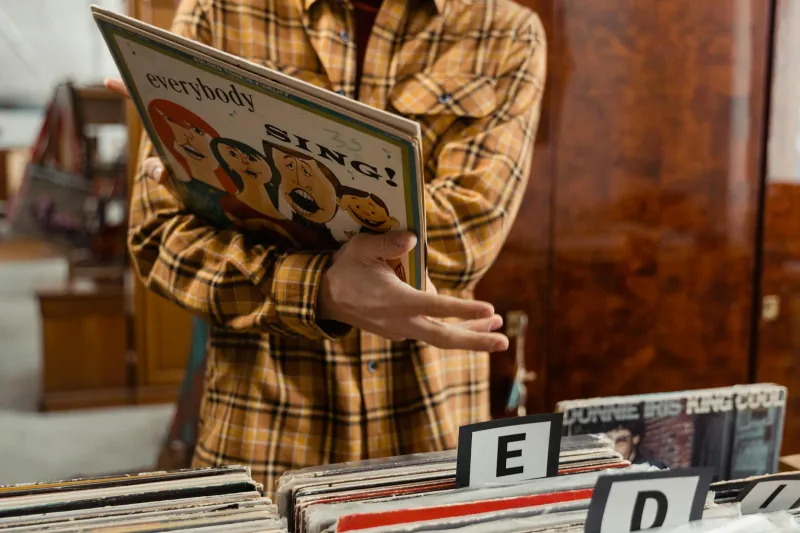
Behind every great cover scene lurks an obsessive collector, and Britain's foreign language underground has produced some proper specimens. Meet Tony Kirkpatrick, a former warehouse manager from Slough who's spent the last fifteen years hunting down obscure European pressings in charity shops and car boot sales.
"People see foreign writing and assume it's worthless," he explains, surrounded by towers of vinyl in languages he can't read. "But music is universal, innit? I've found absolute gems – Belgian psychedelic folk, Romanian new wave, Polish punk that sounds like it was recorded in someone's bathroom."
Tony's discoveries have become the raw material for countless cover versions. His digitised collection, shared freely through underground networks, has inspired everyone from art school dropouts to pensioners with home studios. The result is a constant feedback loop of reinterpretation, each version drifting further from the original until something entirely new emerges.
Pub Philosophy and Phonetic Poetry
Down at The Lamb & Flag in Camden, Thursday nights belong to 'Lost in Translation' – a covers night where the only rule is that you can't perform in English. The results are predictably chaotic and occasionally transcendent.
"Language is just sounds anyway," philosophises regular performer Danny Wright, whose rendition of 'Nessun Dorma' in broad Scouse has become something of a legend. "Half the time when people sing in English, you can't understand them either. At least when I'm murdering Italian opera, I'm being honest about it."
This honesty – this cheerful acknowledgement of limitation – might be the secret sauce. British musicians have always excelled at taking American forms and making them their own through sheer bloody-mindedness. The foreign language covers scene applies the same logic: if you can't do it properly, do it so wrong it becomes right.
Digital Decay and Algorithmic Accidents
The internet age has supercharged Britain's translation obsession. YouTube algorithms throw up random international hits, Spotify's global playlists expose bedroom producers to genres they've never heard of, and Google Translate provides hilariously literal lyric interpretations that become art in their own right.
Glasgow's Phantom Karaoke collective has built an entire aesthetic around feeding foreign pop songs through translation software multiple times, watching meaning dissolve into beautiful nonsense. Their track 'Tuesday Morning (After Gainsbourg)' started as 'Lundi Matin' but passed through seventeen languages before emerging as something simultaneously familiar and alien.
"Every translation loses something and gains something else," explains collective member Jamie Ross. "By the time we've fed a French chanson through Mandarin, Swahili, and Welsh, it's become something completely different. But the emotional core survives. Maybe even gets stronger."
The Accidental Avant-Garde
What makes Britain's foreign language covers scene so compelling isn't the technical proficiency – it's the complete lack of it. These aren't trained linguists or world music scholars; they're ordinary punters with extraordinary enthusiasm and a healthy disregard for accuracy.
The results often sound like field recordings from a parallel universe where cultural exchange happened entirely through Chinese whispers and broken telephone connections. It's accidental avant-garde, experimental music created by people who'd run a mile from anything labeled 'experimental.'
Perhaps that's why it works. In an age of algorithmic precision and auto-tuned perfection, there's something profoundly human about getting it gloriously wrong. These covers don't just translate songs; they translate feelings, experiences, the universal human condition of never quite understanding but trying anyway.
Finding Truth in the Wreckage
As Britain's foreign language covers scene continues to evolve, one thing remains constant: the beautiful chaos of miscommunication. Whether it's a death metal band from Birmingham tackling French café music or a pensioner from Bournemouth reimagining Bollywood classics on a Casio keyboard, the spirit remains the same.
It's about connection across barriers, understanding without comprehension, finding truth in translation's wreckage. And in a world increasingly divided by language, politics, and digital echo chambers, maybe that's exactly the kind of beautiful madness we need.
After all, music was never really about the words anyway.