The Hiss Heard 'Round Britain
In a converted coal shed in Wigan, Dave Thornton carefully adjusts the recording levels on his ancient Fostex four-track. The VU meters dance as he lays down another take of his latest composition—a sprawling ambient piece that'll eventually find its way onto a C60 cassette, complete with hand-drawn cover art and a print run of exactly 50 copies. "Digital's too clean," he mutters, rewinding the tape for the hundredth time today. "Where's the soul in perfection?"
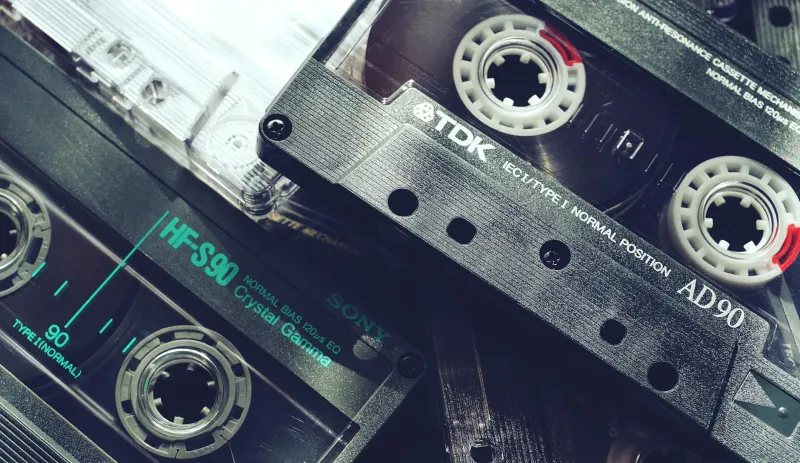
Thornton isn't alone in his magnetic tape obsession. Across Britain, from the Highlands to the Home Counties, a stubborn community of artists, labels, and collectors are keeping the cassette flame burning with religious fervour. They're not just nostalgic—they're revolutionaries armed with Walkmans.
More Than Just Nostalgia
The numbers don't lie: cassette sales in the UK have grown steadily since 2013, with 2023 seeing a 30% increase over the previous year. But this isn't your dad's Now That's What I Call Music collection gathering dust in the attic. This is something far more subversive.
"Cassettes are the great equaliser," explains Sarah Mitchell, who runs Rust & Bone Records from her Bristol flat. "Anyone can make a tape. You don't need a pressing plant, you don't need distribution deals. Just a decent deck and some blank tapes from eBay." Her label specialises in what she calls "beautiful failures"—experimental ambient works, harsh noise explorations, and field recordings that would never survive the streaming economy's three-second attention span.
Mitchell's latest release, a collaboration between a Cornish sound artist and a defunct washing machine, sold out its 75-copy run within hours of being announced on Instagram. "The people who buy tapes aren't passive consumers," she says. "They're active participants in keeping something alive."
The Politics of Imperfection
For many in Britain's cassette underground, the format's limitations aren't bugs—they're features. The tape hiss, the wow and flutter, the inevitable degradation that comes with each play: these aren't obstacles to overcome but essential elements of the artistic statement.
"Spotify gives you the same song every time," argues Marcus Webb, whose Manchester-based Crooked Tooth Tapes has released over 200 titles since 2019. "But a cassette is a living thing. It changes with each listen, picks up the environment around it. My copy of an album sounds different from yours because we've lived different lives with it."
Webb's catalogue reads like a manifesto for the marginalised: drone compositions recorded in abandoned factories, punk bands who've never played a proper gig, field recordings from Britain's forgotten industrial wastelands. Each release comes with extensive liner notes hand-typed on a 1970s Olympia typewriter.
"We're not trying to compete with the major labels," Webb insists. "We're trying to preserve something they've forgotten how to do: take risks."
The Bedroom Economy
The economics of cassette culture operate on an entirely different planet from the streaming ecosystem. Where Spotify pays fractions of pennies per play, a £5 tape sold directly to a fan puts real money in an artist's pocket immediately. No middlemen, no algorithms, no playlist politics.
Jamie Chen discovered this firsthand when her experimental electronic project, Fever Nest, released a debut album exclusively on cassette through Birmingham's Null Zone Records. "I made more money from 100 tapes than I did from 50,000 Spotify streams," she reveals. "Plus, people who buy tapes actually listen to the whole album. They engage with the artwork, read the lyrics. It's a completely different relationship."
Chen's success story is echoing across the country. From the post-punk revivalists of Glasgow to the ambient experimentalists of Brighton, artists are discovering that cassettes offer something streaming never can: genuine connection with their audience.
The Ritual of Play
Perhaps most importantly, cassettes demand intention. In an age of infinite scroll and algorithmic shuffle, inserting a tape and pressing play is a deliberate act. You're committing to an experience, not just background noise.
"There's ceremony in it," reflects Tom Bradley, who runs the legendary Weird Tapes label from his Leeds bedsit. "You have to choose what to listen to. You have to turn the tape over. You have to rewind it. These little rituals create space for the music to breathe."
Bradley's operation is beautifully ramshackle: cassettes dubbed in real-time on consumer decks, covers photocopied at the local library, everything assembled by hand whilst watching Coronation Street. It's the antithesis of the music industry's corporate machinery, and that's precisely the point.
The Future Is Analogue
As major labels scramble to understand TikTok and chase viral moments, Britain's cassette underground is building something more sustainable: genuine communities around genuinely challenging music. These aren't artists seeking fame or fortune—they're seeking connection, authenticity, and the freedom to create without compromise.
"We're not trying to save music," says Dave Thornton, back in his Wigan shed, carefully labelling another batch of tapes. "We're just trying to keep the interesting bits alive."
In a world of algorithmic recommendations and playlist placements, perhaps that's revolution enough. The hiss goes on.