Lag Is a Lifestyle: How Britain's Dial-Up Generation Turned 56K Hell Into Electronic Gold
There's a specific kind of patience that only people who grew up with dial-up internet truly understand. You'd click download, wander off to make a brew, watch half a documentary about meerkats, come back, and find the progress bar had nudged maybe twelve percent forward. For most people, this was agony. For a particular stripe of British bedroom producer in the late nineties and early 2000s, it was, without exaggeration, a compositional education.
The tools were terrible. The connections were glacial. The file sizes were laughably constrained. And somewhere in all of that beautiful dysfunction, a genuinely original generation of electronic musicians quietly invented itself — one corrupted WAV file at a time.
The Tyranny of the Kilobyte
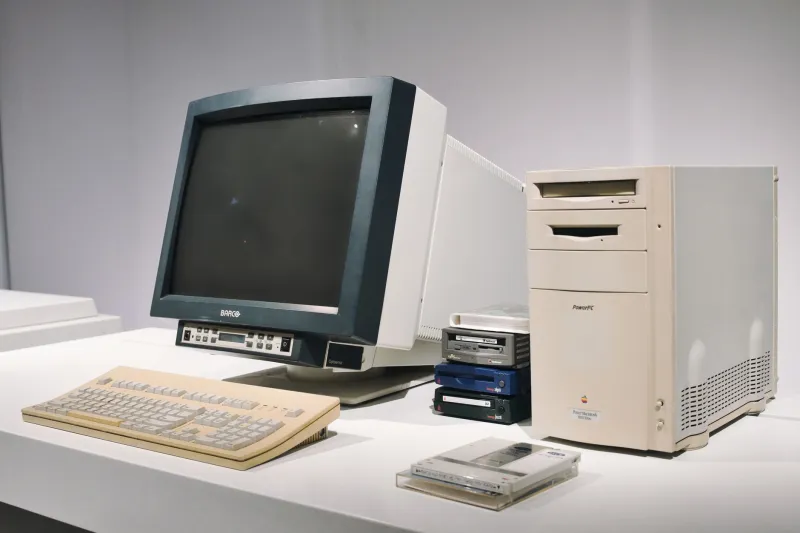
To understand what these producers were working with, you have to remember just how ferociously limited everything was. A three-minute MP3 at anything approaching decent quality could take forty minutes to download on a good day. Forget about streaming. Forget about sample packs. If you wanted sounds, you either recorded them yourself on whatever knackered equipment you had lying around, or you spent the better part of an evening watching a progress bar inch across a screen the colour of old porridge.
This wasn't a minor inconvenience. It fundamentally reshaped how people thought about audio. When every sample costs you twenty minutes of your evening just to acquire, you stop being cavalier about what you use. You start treating sounds with a reverence that modern producers — drowning in terabytes of royalty-free content — simply don't need to develop.
Producers working under these constraints became obsessive about compression artefacts, the strange metallic shimmer that low-bitrate encoding left on certain frequencies. Where a professional engineer would hear degradation, these bedroom experimenters heard texture. Heard character. Heard something that sounded like nothing else on the radio.
MIDI Forums and Midnight Revelations
The community that grew up around these limitations was as important as the technical frustrations themselves. UK-based MIDI forums — names like Mutelab, SoundOnSound's early community boards, and a dozen smaller sites that have since vanished entirely from the internet's memory — became genuinely radical spaces for sonic exchange.
These weren't places where polished professionals traded tips. They were places where a seventeen-year-old in Wolverhampton could share a four-bar loop they'd built entirely from corrupted audio files and receive, within days, thoughtful feedback from someone in Edinburgh who'd been doing something structurally similar but hadn't had language for it yet.
The geography mattered enormously. These weren't scenes in the traditional sense — there were no venues, no promoters, no physical gathering points. The scene existed entirely in the lag between keystrokes, in the hours it took for a forum post to propagate, in the shared experience of creative limitation that connected bedroom producers from Truro to Dundee without any of them ever meeting.
What the Buffering Built
The sonic fingerprints of this era are surprisingly consistent once you know what to listen for. There's a certain grainy warmth to the low end — the result of compressing already-compressed audio until the bass frequencies started doing unpredictable things. There are rhythmic structures that feel slightly off-kilter, because the producer was working with loops that had been stretched or compressed to fit file size requirements, introducing subtle timing irregularities that gave the music an almost human imprecision.
And there are the glitches. Beautiful, deliberate glitches that these producers learned to reproduce manually once they'd accidentally stumbled upon them through technical failure. A corrupted download that skipped in a rhythmically interesting way became a technique. A MIDI timing error that produced an unexpected polyrhythm became a signature move.
This is what makes this body of work so fascinating to excavate now, decades later. It wasn't made despite the limitations. It was made from them, in the same way that early blues was made from the limitations of cheap instruments and makeshift recording setups. The constraint was the curriculum.
The Archives Nobody Kept
Here's the tragedy, though. Most of this music is genuinely lost.
The platforms it lived on — early file-sharing sites, Geocities pages, forum attachment systems — are largely gone. The formats it was stored in have become unreadable on modern hardware. The producers themselves often moved on, deleted their old files, lost hard drives to the general entropy of time and damp British bedrooms.
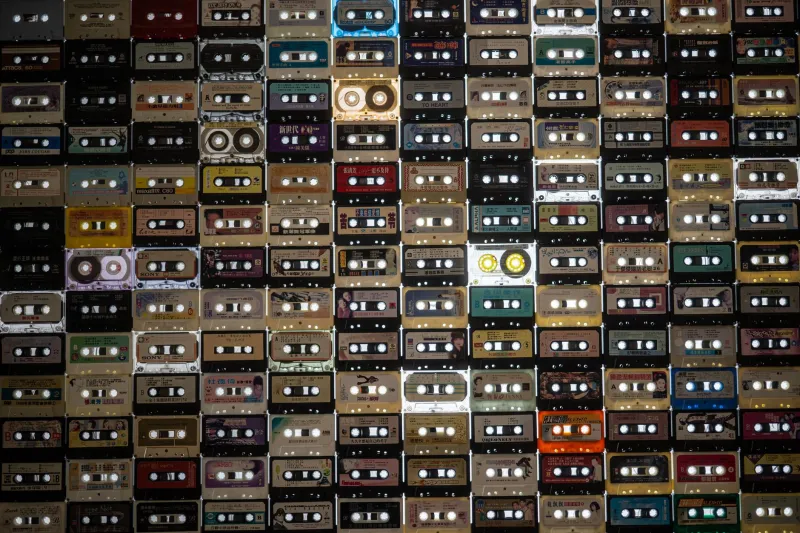
What survives tends to do so in strange ways. Old CDRs discovered in charity shops. Ripped cassettes of forum compilations that somebody's mum kept in a box. Occasional uploads to SoundCloud by producers who've since gone on to completely different careers and can't quite bring themselves to delete the old stuff.
Tracking this material down is painstaking work, and the people doing it occupy a peculiar archival niche — part music historian, part digital archaeologist, part obsessive who needs to explain to their partner why there are fifty unlabelled CDRs taking up space in the spare room.
Why It Still Matters
The easy narrative here would be that this music was ahead of its time — that the glitch aesthetics, the compressed textures, the DIY forum-community distribution model all prefigured things that would later become mainstream. And there's truth in that. But it's not quite the point.
The point is that a generation of British producers, working in conditions of genuine technological adversity, developed creative instincts that were entirely their own. They didn't learn from YouTube tutorials or Splice subscription packs. They learned from failure, from patience, from the specific and unrepeatable experience of waiting forty-five minutes for a file to download and then finding it was corrupted and having to start again.
That experience produced music with a particular quality — a kind of hard-won warmth, a textural richness that comes from treating every sound as precious because acquiring it cost you something real.
Broadband arrived and swept most of it away. The constraint disappeared, and with it, the necessity that had mothered all that invention. The producers who came after had infinite resources and, frequently, made music that sounded like it.
Somewhere on a failing hard drive in a bedroom in Coventry, there are probably tracks that would make your jaw drop. The question is whether anyone's going to find them before the drive gives up entirely.
We'd start looking now, if we were you.