Midnight Frequency: Why Britain's Best Music Gets Made When Everyone Else Is Asleep
Midnight Frequency: Why Britain's Best Music Gets Made When Everyone Else Is Asleep
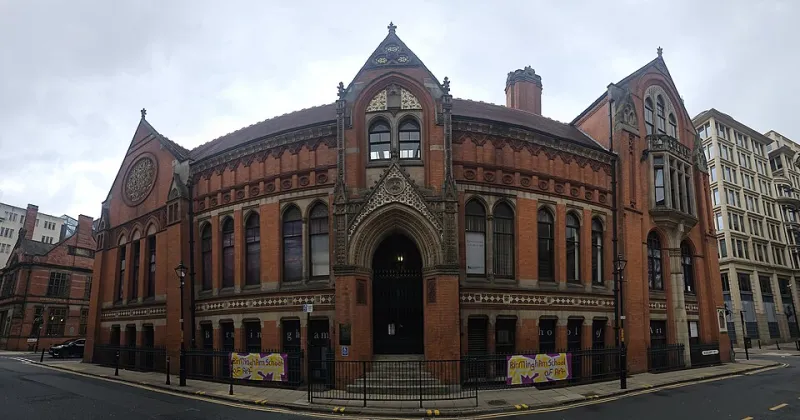
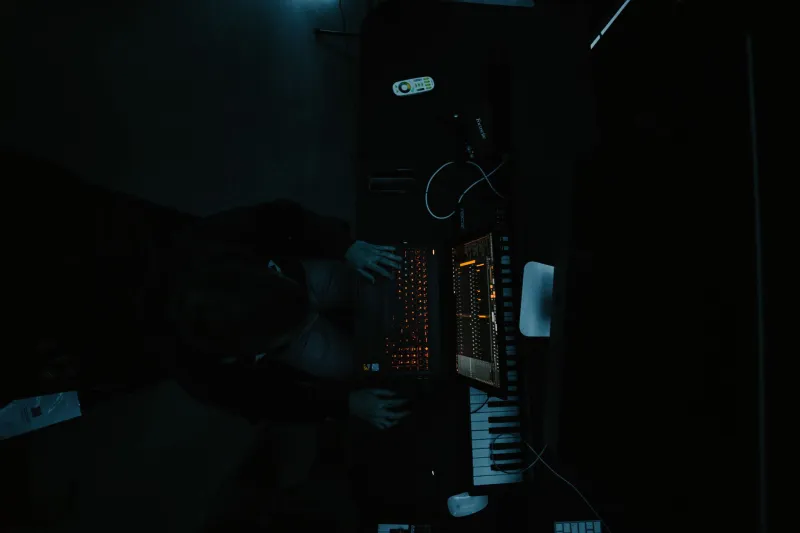
It's half two in the morning in Hanley, Stoke-on-Trent. The kebab shops are shutting. The last stragglers from the Wetherspoons are arguing about a taxi. And somewhere in a third-floor flat above a closed-down bookmaker's, a bloke called Marcus is recording the strangest, most beautiful thing he's made in five years — wearing a dressing gown, eating cold Pot Noodle, completely unable to explain why it's working so well.
 Photo: Hanley, Stoke-on-Trent, via d3e1m60ptf1oym.cloudfront.net
This is not unusual. Not in Britain's underground music world, anyway.
The Fatigue Factor
There's a reason the most experimental, rule-breaking British music tends to surface at ungodly hours, and it isn't just romantic mythology. Sleep deprivation — mild, manageable sleep deprivation, the kind that hits you around the two or three in the morning mark — does something genuinely interesting to the brain's filtering mechanisms. The internal critic that spends all day going that chord's a bit naff or nobody wants to hear a six-minute drone piece about a supermarket car park simply gets too tired to keep its gob shut.
What's left is the raw instinct. The weird idea that would get talked out of existence in daylight. The texture you'd normally dismiss as an accident.
Producers and bedroom artists across the UK will tell you the same thing, unprompted, if you get them talking honestly: the sessions that genuinely surprised them almost always started after midnight.
Glasgow at 4AM: Where Weird Becomes Gospel
Head up to Glasgow and the nocturnal recording culture takes on a slightly more organised, slightly more chaotic character. The city has a long tradition of all-night studio sessions that blur the line between disciplined work and collective delirium.
In the mid-2010s, a loose collective of electronic producers working out of a repurposed industrial unit in Govan developed what they half-jokingly called "the golden hour" — not sunrise, but the window between 3AM and 5AM when, according to them, the music stopped being polished and started being true. Tracks that had felt over-produced and safe at midnight would suddenly reveal what they actually wanted to be after another two hours of bleary-eyed tinkering.
One of those producers, who releases under a name that loosely translates from Scots slang as "complete nonsense," described it to us like this: "You stop performing for an imaginary audience. There's nobody left in your head to impress. You're just making the sound because the sound wants to exist."
Hard to argue with that, really.
The Mythology vs. The Reality
Of course, there's always a risk of romanticising this stuff. Not every 3AM recording session produces a buried classic. Plenty of them produce forty-five minutes of someone noodling tunelessly on a borrowed synth before falling asleep on their keyboard. The internet is full of SoundCloud tracks timestamped 4:17AM that are, frankly, dire.
But the mythology exists for a reason. Britain's underground music history is littered with pivotal recordings made in the small hours by people who'd lost track of time, run out of caution, and stumbled into something they couldn't have planned.
The early tape recordings that circulated around the post-punk scenes of Sheffield and Manchester in the late seventies were frequently made at odd hours in cramped flats, partly because that was when shared equipment was available, and partly because the people making them were working day jobs and only had nights free. The urgency and rawness that made those recordings extraordinary wasn't an aesthetic choice — it was a by-product of exhaustion and necessity.
Sound familiar?
The Insomniac Advantage
There's a specific subset of Britain's nocturnal music community that deserves a mention: the genuine insomniacs. Not people who stay up late by choice, but the ones for whom 3AM is simply Tuesday.
Anxiety, racing thoughts, an inability to switch off — these are not glamorous conditions. But several artists working in the weirder corners of the UK underground have spoken openly about how their sleeplessness became, over time, a creative tool rather than just a curse. The music made during those involuntary waking hours carries a quality that's difficult to fake: a kind of desperate honesty, a reaching-for-something-that-isn't-quite-there that gives the work its texture.
A Bristol-based ambient producer who's released a string of quietly extraordinary cassettes over the past few years puts it bluntly: "I've tried making music in the afternoon. It sounds fine. It sounds like music that was made in the afternoon. That's the problem."
The Kit Doesn't Matter, The Hour Does
What's striking about Britain's 3AM underground is how little correlation there is between the quality of the equipment and the quality of the results. Some of the most compelling nocturnal recordings have been made on ancient laptops, battered four-tracks, and phones propped up against mugs.
This is partly because the inhibitions that make people self-conscious about their gear — I can't release this, the production isn't good enough — tend to dissolve alongside everything else in the small hours. You stop worrying about whether your reverb sounds expensive and start worrying about whether the song is saying the thing it needs to say.
That shift in priority is everything.
Keep the Lights Off
If there's a lesson Britain's nocturnal recording underground has to offer the wider music world, it's a simple and slightly inconvenient one: you cannot fully manufacture the conditions that make this music happen. You can stay up late deliberately. You can turn the lights off and pretend. But the real thing — the accidental genius of a session that's gone on too long, where the filters are down and the ideas are coming from somewhere unguarded — that requires surrender rather than strategy.
The best weird music Britain makes at 3AM isn't made at 3AM. It's made by 3AM. There's a difference. And if you've ever been there, you already know exactly what we mean.