Static Uprising: How Britain's Pirate Broadcasters Turned Illegal FM Into a Live Art Form
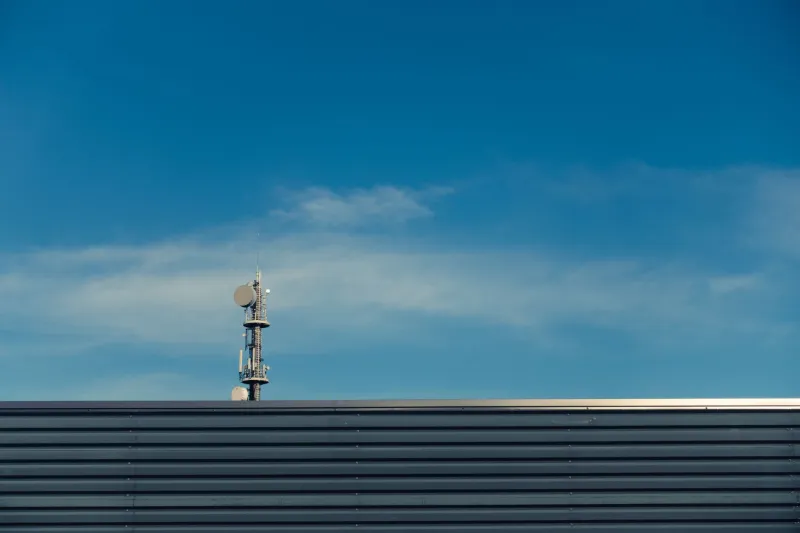
Somewhere above the rooftops of South London, a signal is bleeding into the FM dial. It's not playing grime, or old jungle, or pirated chart hits — the traditional currency of Britain's rogue broadcasting heritage. What's coming out of car speakers and kitchen radios between 98.4 and 98.6 FM on certain Tuesday evenings is something considerably harder to explain: a slowly evolving drone constructed from field recordings, intercepted CB radio chatter, and what sounds — though nobody can confirm this — like a cello being played inside a tumble dryer.
This is not a test. This is not a malfunction. This is the new pirate radio.
A History Worth Nicking
Britain has always had a complicated, affectionate relationship with illegal broadcasting. From the ships anchored in international waters in the sixties to the tower block transmitters of the acid house era, pirate radio has historically been the mechanism through which music that mainstream institutions refused to touch found its way to the people who needed it most.
The formula was usually the same: take music that exists, broadcast it without a licence, get raided by Ofcom, repeat. The point was the music. The illegality was just a necessary inconvenience.
What's happening now is structurally similar but philosophically completely different. A scattered network of experimental musicians and audio artists — operating across London, Manchester, Birmingham, Glasgow, and several smaller cities that would rather not be named — are using pirate frequencies not to redistribute existing recordings, but to broadcast original, live-mixed compositions in real time. The transmission itself is the performance. The audience has no idea it's happening.
The Medium Is Very Much the Message
Speak to anyone involved in this scene and the same word comes up repeatedly: interference. Not as a problem to be solved, but as a creative tool to be embraced.
FM transmission at low power, through improvised equipment, across urban environments is inherently unstable. Buildings eat signals. Other transmissions bleed through. The weather affects propagation in ways that are genuinely unpredictable. For a conventional broadcaster, this is a nightmare. For the producers working in this scene, it's an instrument.
"I plan a composition, and then the city remixes it," explains one producer — who agreed to speak to us on condition of anonymity and insisted we refer to them only as Wavelength Wendy, which we are delighted to do. "I'll start broadcasting something I've constructed over weeks, and by the time it reaches someone's radio in Peckham, it's been filtered through three tower blocks and someone else's dodgy transmitter. It arrives different. It arrives better, usually."
The instability of the medium has become the defining aesthetic of the output. Compositions are deliberately designed with gaps — spaces where interference can enter, where the signal can breathe and mutate. Some broadcasts include instructions, read aloud, inviting listeners to tune slightly off-frequency to deliberately introduce more static. It's participatory art conducted entirely without the audience's knowledge or consent, which is either brilliantly radical or mildly antisocial depending on your perspective.
The Commuter as Unwitting Collaborator
There is something genuinely extraordinary about the idea that someone sitting in traffic on the A23, half-listening to the radio while thinking about whether they remembered to defrost something for tea, might be the sole audience for a forty-minute experimental composition that will never be heard again.
The broadcasts aren't advertised. There are no social media accounts, no mailing lists, no Bandcamp pages. A few community members leave cryptic references on obscure forums — a frequency, a time, a borough — but even those are inconsistent. The vast majority of listeners encounter these transmissions entirely by accident.
"That's the whole point," says Wavelength Wendy. "I'm not interested in playing to a room full of people who've already decided they like experimental music. I want to reach the person who's never thought about it at all. The commuter who hits scan on their radio and lands on something that makes them think: what on earth is that? That moment — that confusion — is the art."
Ofcom and Other Obstacles
It would be naive not to acknowledge the elephant in the room, or rather, the enforcement van parked near the transmitter. Ofcom takes illegal broadcasting seriously, and operators in this scene are well aware of the risks. Equipment is kept minimal and mobile. Broadcast locations rotate. Sessions rarely exceed two hours.
Several participants have been issued warnings. At least one has had equipment confiscated. The community has developed a set of informal protocols — shared on encrypted channels — for spotting enforcement activity and shutting down quickly.
There's a certain irony in the fact that the same legal framework designed to protect the airwaves from exploitation is also, inadvertently, shaping the aesthetic of this music. The need for brevity, mobility, and unpredictability has made the compositions more urgent, more strange, more alive.
What Comes Next
Some participants are beginning to archive their broadcasts — recording the transmitted signal, including all interference and degradation, rather than the clean source material. These recordings are circulated privately, on physical media only, as a deliberate rejection of streaming's permanence and accessibility.
There are whispers of a compilation. There are also whispers that a compilation would entirely miss the point.
What's clear is that something genuinely new is happening on Britain's airwaves — something that takes a tradition of righteous lawbreaking and bends it toward art rather than commerce. The pirates are still out there. They've just stopped playing other people's records and started making their own noise instead.
Tune in. Or don't. You might stumble across it anyway.