33 and a Third of Brilliant: The Record Nerds Who've Cracked Music's Secret Wrong-Speed Codes
33 and a Third of Brilliant: The Record Nerds Who've Cracked Music's Secret Wrong-Speed Codes
It starts, as so many great British musical obsessions do, with an accident and a pint.
Roger, a retired postman from Huddersfield who has asked us not to use his surname because his wife "already thinks this has gone too far," first played a record at the wrong speed in 1987 when his turntable's speed selector stuck between settings. The record was a 12-inch single. The experience, he says, changed how he hears music entirely.
"It wasn't just slower. It was different. Like the record had been keeping a secret and the broken mechanism accidentally asked the right question."
Thirty-seven years later, Roger has a spreadsheet. It runs to over four hundred entries. Every record he owns, annotated with notes on what it reveals at alternative speeds. He is not, it turns out, alone.
The Glorious Nerdery of Wrong-RPM Listening
The practice of deliberately playing vinyl at incorrect speeds occupies a peculiar corner of British record culture — too serious to be a joke, too playful to be proper musicology, too specific to be mainstream, and too fascinating to ignore. Online forums, record fair conversations, and the kind of pub discussions that go three hours over schedule are full of passionate advocates insisting that their particular wrong-speed discovery is genuine revelation rather than audio pareidolia.
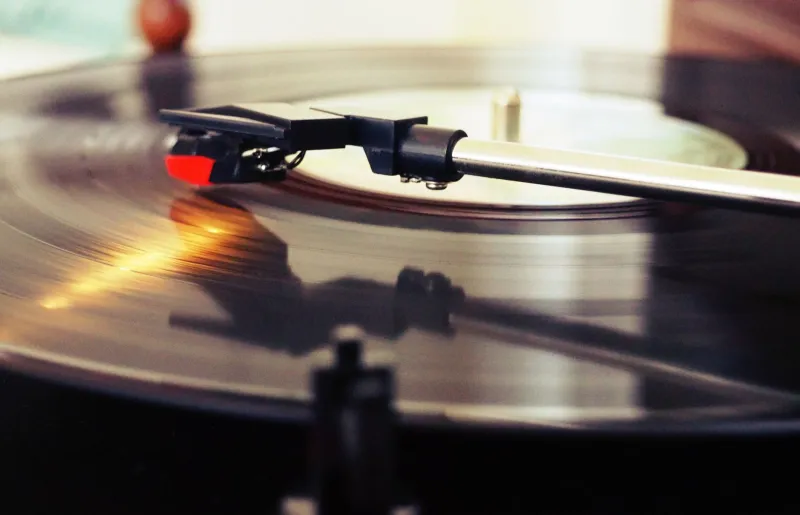
The mechanics are simple enough. Most domestic turntables operate at 33⅓ RPM for LPs and 45 RPM for singles, with some offering 78 RPM for older shellac records. Playing a 45 at 33 slows it down, dropping the pitch and stretching time. Cranking an LP up to 45 does the opposite — everything accelerates, vocals rise in pitch, rhythms tighten into something manic. The results range from genuinely beautiful to absolutely deranged, and the community has strong opinions about which is which.
"There's a difference between slowing something down and discovering something," insists Margot, a record dealer from Brighton who runs a monthly listening session she calls Wrong Turns, where a rotating group of collectors bring records specifically to play at the wrong speed. "When you slow down a 45 and it suddenly sounds like a lost Scott Walker track from a parallel universe, that's not just a party trick. That's information."
The Accidental Discoveries That Started Everything
The wrong-speed community is built on origin stories — that first accidental moment when someone played something incorrectly and couldn't unhear what they found.
Perhaps the most widely circulated in UK vinyl circles is the alleged discovery that a well-known Northern Soul 45 — collectors are deliberately vague about the title, partly for mystique and partly because the debate about which 45 is genuinely unresolved — played at 33 reveals a completely different emotional character to the track: the euphoric dancefloor energy collapses into something melancholic and strange, and a guitar part buried in the mix suddenly becomes the whole point of the record.
"It's like the producers mixed it for 45 but wrote it for 33," says Denzil, a Manchester-based collector who claims to have played the track for over fifty people and watched every single one of them go quiet. "The 45 version is the advertisement. The 33 version is the actual song."
This theory — that wrong-speed playback reveals a kind of submerged original intent — is the intellectual heart of the movement, and it's more credible than it sounds. Recording engineers have long known that certain musical decisions, made at one speed, produce unintended but striking results at another. Tape manipulation, the foundation of so much experimental music from the 1960s onwards, is essentially formalised wrong-speed thinking.
The Chipmunk End of the Spectrum
Not all wrong-speed discovery is solemn. A significant and enthusiastic faction of the community is primarily interested in the comedy end — specifically, what happens when you play a portentous, self-serious album at 45.
"There is no faster cure for pretension," says Phil, a teacher from Norwich who has been running a semi-anonymous blog called Forty-Five Everything since 2018, documenting his attempts to play every record he owns at the wrong speed. His most-shared post concerns a highly regarded and extremely earnest 1970s progressive rock album played at 45. "It becomes this demented squirrel opera. The twenty-minute keyboard solo is now four minutes and sounds like a fairground ride having a breakdown. It's perfect."
Phil is careful to say he's not mocking the music — or not only mocking it. "When you speed something up that much, you hear the structure differently. You hear the decisions. It's like watching a film at double speed — suddenly you notice all the editing choices because you're not lost in the story."
This is the community's most interesting tension: the line between parody and analysis, between laughing at a record and learning something genuine from it at the wrong speed. Most serious practitioners insist the two aren't mutually exclusive.
The Pub Arguments That Never Resolve
Spend any time in this world and you'll encounter the debates that have been running for years without resolution. Is playing a record at the wrong speed hearing it better or simply hearing it differently? Is the emotional response to a slowed-down 45 genuine musical experience, or just the brain finding patterns in altered stimuli? And — the nuclear option in any wrong-speed discussion — did any original artists intend for their records to be heard this way?
"That last question is completely the wrong question," says Margot, with the weary authority of someone who's had this argument many times. "Intent is overrated. The record exists. The turntable exists. The result exists. Whether the artist meant it is almost beside the point."
Roger, updating his spreadsheet in Huddersfield, is more pragmatic still. "I don't care what anyone intended. I care what I hear. And what I hear, at the wrong speed, is often something I couldn't hear any other way."
His wife, for the record, remains unconvinced. But she's stopped complaining about the spreadsheet. Progress, in its own way, at its own pace.