Beautiful Blunders: When Britain's Turntable Disasters Became Tomorrow's Sound
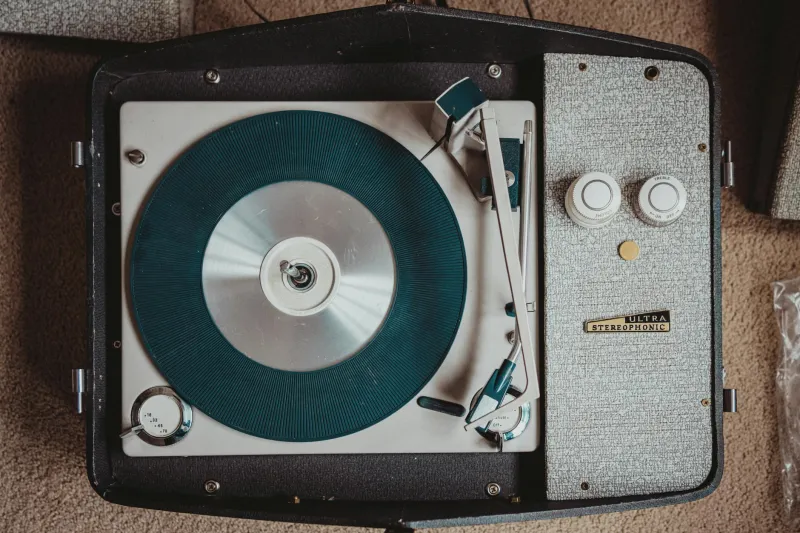
Speed Kills (The Right Way)
Somewhere in a Jamaican-British sound system in 1970s London, a selector grabbed the wrong 45 and accidentally played a reggae tune at 33⅓ RPM instead of 45. The bass dropped so low it rattled windows three streets away. The crowd went mental. Dub was born.
Well, sort of. The real story's messier, involves more people, and definitely more spliff. But the principle stands: some of Britain's most distinctive musical moments have emerged from someone ballsing up the basics.
This isn't about technical perfection. This is about the beautiful chaos that happens when human error meets creative opportunity.
The Sound System Accidents
Britain's Caribbean communities didn't just import reggae — they reimagined it through the lens of council estate acoustics and knackered equipment. In Brixton basements and Birmingham blues parties, ancient Technics turntables ran at whatever speed they fancied, transforming Studio One classics into something entirely new.
Mikey Dread, broadcasting on BBC Radio London in the late '70s, would regularly speed up and slow down tracks mid-broadcast, creating spontaneous remixes that influenced a generation of British producers. His show wasn't just radio — it was live sound sculpture, using technical limitations as creative tools.
 Photo: Mikey Dread, via suprememotos.com
The punk scene caught on quickly. John Peel's sessions regularly featured bands playing their own songs at deliberately wrong speeds, creating alternate versions that sometimes outshone the originals. The Slits' '77 session included a slowed-down 'Love and Romance' that sounded like it was being played underwater — and it was magnificent.
Industrial Accidents
Sheffield's industrial scene built an entire aesthetic around malfunctioning equipment. Cabaret Voltaire's early recordings feature drum machines running at inconsistent speeds, creating the stuttering, hypnotic rhythms that defined their sound. This wasn't planned — their gear was simply too old and too cheap to maintain consistent timing.
Chris Watson, before his nature recording career, spent hours with the Cabs deliberately abusing their equipment. "We'd record everything at the wrong speed, then play it back at different speeds again," he recalls in a 1982 interview. "The idea was to destroy the original until something beautiful emerged from the wreckage."
Throbbing Gristle took this philosophy even further, creating compositions by playing multiple records simultaneously at different speeds. Their 'Hamburger Lady' sessions involved four turntables running at different RPMs, creating polyrhythmic chaos that somehow cohered into disturbing beauty.
The Rave Revolution
When acid house hit British shores, the wrong-speed aesthetic became weaponised. DJs discovered that playing house records at breakneck speeds created an entirely new feeling — one that perfectly matched the amphetamine-fuelled energy of warehouse raves.
Carl Cox built his reputation on seamlessly mixing records at wildly different speeds, creating hour-long journeys that defied conventional DJ logic. His sets weren't just track selections — they were speed symphonies, taking dancers through different time zones within the same four walls.
 Photo: Carl Cox, via www.guides-france.com
The hardcore scene that emerged from these experiments was pure speed science. Producers like Lenny Dee and Marc Smith would record breaks at one speed, then play them back at double time, creating the frantic breakbeats that defined early British rave. The aesthetic was pure acceleration — faster, harder, more intense than anything the human body was designed to process.
Bedroom Laboratory Experiments
Today's bedroom producers have inherited this tradition of creative incompetence. Armed with ancient samplers, knackered laptops, and a healthy disrespect for manufacturer specifications, they're continuing Britain's proud tradition of making beautiful mistakes.
Devon's lo-fi scene has particularly embraced the wrong-speed aesthetic. Producers like Boards of Canada's British disciples record everything through deliberately damaged equipment, then slow it down until it sounds like childhood memories filtered through cough syrup.
The vaporwave movement took this concept global, but British producers added their own twist: instead of slowing down smooth jazz and R&B, they decelerated britpop and rave classics, creating nostalgic fever dreams that sounded like the '90s viewed through a haze of prescription medication.
Technical Rebellion
What looks like accident is often deliberate rebellion against digital perfection. In an age where software can correct every timing error and pitch variation, choosing to play things at the wrong speed becomes a political statement.
Jamie xx's early productions deliberately featured pitch-shifted samples that sounded 'wrong' by conventional standards. His remix work with The xx involved slowing down dance tracks until they became ambient meditation music, proving that tempo is just another creative parameter to be manipulated.
Four Tet has built an entire aesthetic around temporal displacement, speeding up and slowing down found sounds until they exist in a different time zone entirely. His live sets feature real-time speed manipulation, creating unique versions of tracks that exist only in that moment.
The Philosophy of the Cock-Up
There's something fundamentally British about turning technical incompetence into artistic statement. We've always been suspicious of things that work too well, too smoothly. Give us a choice between perfection and character, and we'll choose character every time.
This extends beyond music into British culture generally. We celebrate the bodge job, the make-do-and-mend approach, the beautiful failure. Playing records at the wrong speed is just the musical expression of this deeper cultural tendency.
Modern digital audio workstations include 'vintage' plugins that simulate the timing irregularities of old equipment. Software engineers spend months programming in the kinds of errors that British musicians have been celebrating for decades. We've come full circle: the mistakes have become the standard.
Preserving the Accident
As streaming algorithms optimise everything for 'perfect' playback, the wrong-speed tradition becomes more precious. These aren't just sonic curiosities — they're documents of human creativity triumphing over technical limitation.
Every time a British producer deliberately slows down a sample until it becomes something unrecognisable, they're continuing a tradition that stretches from Jamaican sound systems to Sheffield basements to Peckham bedrooms. They're proving that the best innovations often come not from having better equipment, but from refusing to use equipment properly.
In an industry increasingly obsessed with technical perfection, Britain's wrong-speed tradition represents something invaluable: the right to be brilliantly, creatively wrong.
And long may we continue ballsing things up in the most beautiful ways possible.