Fifty Pence of Pure Power: In Defence of the Boozer Jukebox
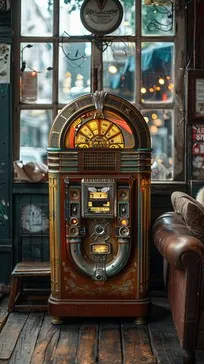
Photo: pub jukebox retro British pub interior, via images.stockcake.com
Somewhere in Britain right now — probably in a Spoons with a name like The William Caxton or The Standing Order — a man in a fleece is feeding fifty pence into a machine and preparing to inflict Motörhead on a room of people eating all-day breakfasts at 11am. He is not asking permission. He is not curating a vibe. He is exercising the last unregulated democratic right this country has left.
We should treasure him.
The People's Platform
Think about what the pub jukebox actually is, stripped of nostalgia. It's a pay-what-you-want, first-come-first-served broadcast system where the only barrier to entry is spare change and nerve. No algorithm deciding what you hear. no playlist gatekeeper, no sponsor. One coin, one choice, one room of strangers who have to live with it.
Where else in British music life does that exist? Festivals are £300 and curated within an inch of their lives. Radio is focus-grouped to buggery. Streaming has made listening so frictionless it's practically weightless — skip, skip, skip, nothing sticks. The jukebox is the opposite: you commit. You walk to the machine, you scan the laminated card, you make your choice, and then you sit in it. There's no skip button. There's only consequence.
That's why jukebox choices are the most honest musical statements a Brit can make. Nobody jukeboxes to impress. You jukebox because you want to hear that song, in that room, right now.
The Regulars
Every long-standing boozer has its legends. The bloke who plays the same six-minute soul epic every Friday and has done since 1998. The woman whose entire jukebox strategy is building a narrative arc across three songs — something rowdy, something weepy, something for the walk home. The group who pool coins specifically to play one track eleven times in a row, which is either vandalism or art depending on the track.
"Our Derek," as one regular of a Blackpool pub put it to us, "only ever plays 'Love Will Tear Us Apart' and 'Fairytale of New York', regardless of the month. Christmas in July, in his head. Nobody argues anymore. It's just weather now."
These people are curators whether they know it or not. They're the reason a generation of pub-goers knows songs they'd never have found anywhere else. The jukebox is a recommendation engine with no profit motive — just taste, chance, and whatever's on the card this quarter.
The Quiet Decline (and Why We Should Fight It)
Here's the roast, and here's the worry: the machines are disappearing. Background music systems, telly on every wall, phone speakers on the next table — the jukebox is being squeezed out by convenience, the way everything good is. A generation raised on infinite skips doesn't see the appeal of a machine that plays what it's told and nothing else.
They're wrong. The friction is the point. The coin slot is the point. The fact that your choice lands in a room, in real time, among people, is the point. Every streaming service is a private booth. The jukebox is a town square with a speaker system.
So here's the Nutty Traxx position, formally: if you walk past a jukebox, play something. Play something odd. Play the B-side. Play the track that makes the man doing the crossword look up. The machine only stays alive if it gets fed, and Britain stays interesting only if its corners get filled with the sounds somebody, somewhere, paid fifty pence to impose on the rest of us.
Long live the coin. Long live the room. Long live Derek.