Platform Noise: The Gloriously Chaotic Musical History of Britain's Railway Stations
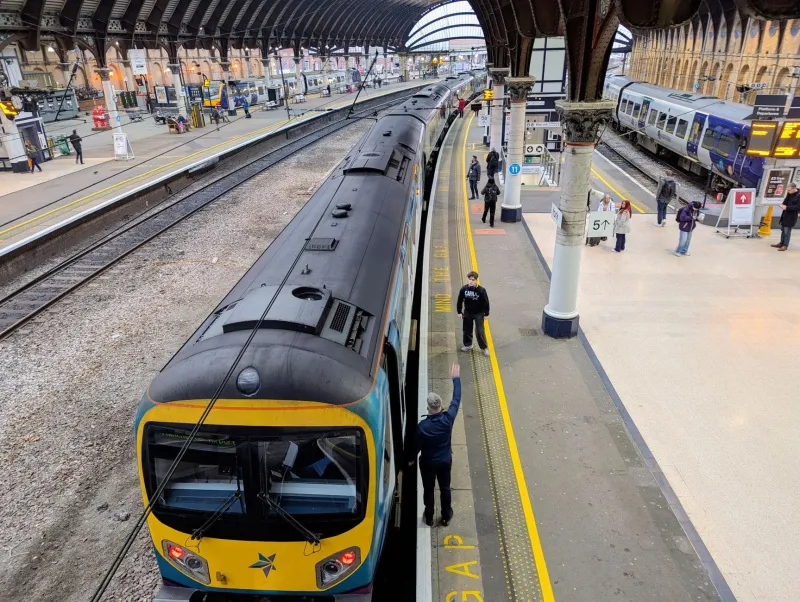
Platform Noise: The Gloriously Chaotic Musical History of Britain's Railway Stations
The acoustics are appalling. The audience is hostile, or at best indifferent. The venue management — a term applied loosely to an institution whose primary concern is the movement of trains rather than the movement of souls — is constitutionally suspicious of anyone making sounds that weren't scheduled in advance. And yet, for a certain kind of musician, there is no space in Britain more creatively charged than a railway station.
This is not a conventional argument. It probably shouldn't be a conventional argument. But stick with it, because the history of musical performance in Britain's rail network is stranger, richer, and more genuinely influential than anyone involved in official music culture would ever admit.
The Acoustic Accident
Start with the sound. Railway stations were not designed with music in mind. They were designed to funnel people from one place to another as efficiently as possible, which means high ceilings, hard surfaces, and vast open spaces that create reverb patterns no recording engineer would ever deliberately choose.
But reverb, as any electronic musician or experimental composer will tell you, is not inherently bad. It's just a property of space. And the specific reverb of a Victorian railway terminus — those arching iron-and-glass cathedrals that Britain built in the nineteenth century with a confidence that now seems almost hallucinatory — is unlike anything else. Notes hang in the air longer than they should. Harmonics multiply unexpectedly. A single voice can fill a space that seats thousands.
Musicians who have played in these environments don't forget it. There's a reason that a significant number of British ambient and drone artists cite unexpected station performances as formative experiences. The space teaches you things about sound that no studio ever could.
The Busk and the Beautiful
Busking is the obvious entry point into this history, but it's worth resisting the temptation to romanticise it too quickly. The reality of busking in a British train station is frequently grim — permit systems, designated pitches, strict time limits, and the ever-present possibility that whatever you're playing will be drowned out by a Southeastern announcement about the 14:47 to Faversham.
But within those constraints, something interesting has consistently happened. The pressure of the environment — the indifferent audience, the competing noise, the time limit — forces a kind of creative economy that more comfortable settings don't demand. You have roughly ninety seconds to make someone stop walking. If your music can do that in a railway station, it can do it anywhere.
Some of Britain's most interesting buskers have used this logic deliberately. Rather than fighting the station's sonic environment, they've incorporated it — looping platform announcements into compositions, using the rhythmic clatter of trains as percussion, building sets around the specific reverb characteristics of particular locations. King's Cross underpasses have their own sound. So does Birmingham New Street's concourse. Leeds station in the early morning has an acoustic quality that several musicians have described as genuinely otherworldly.
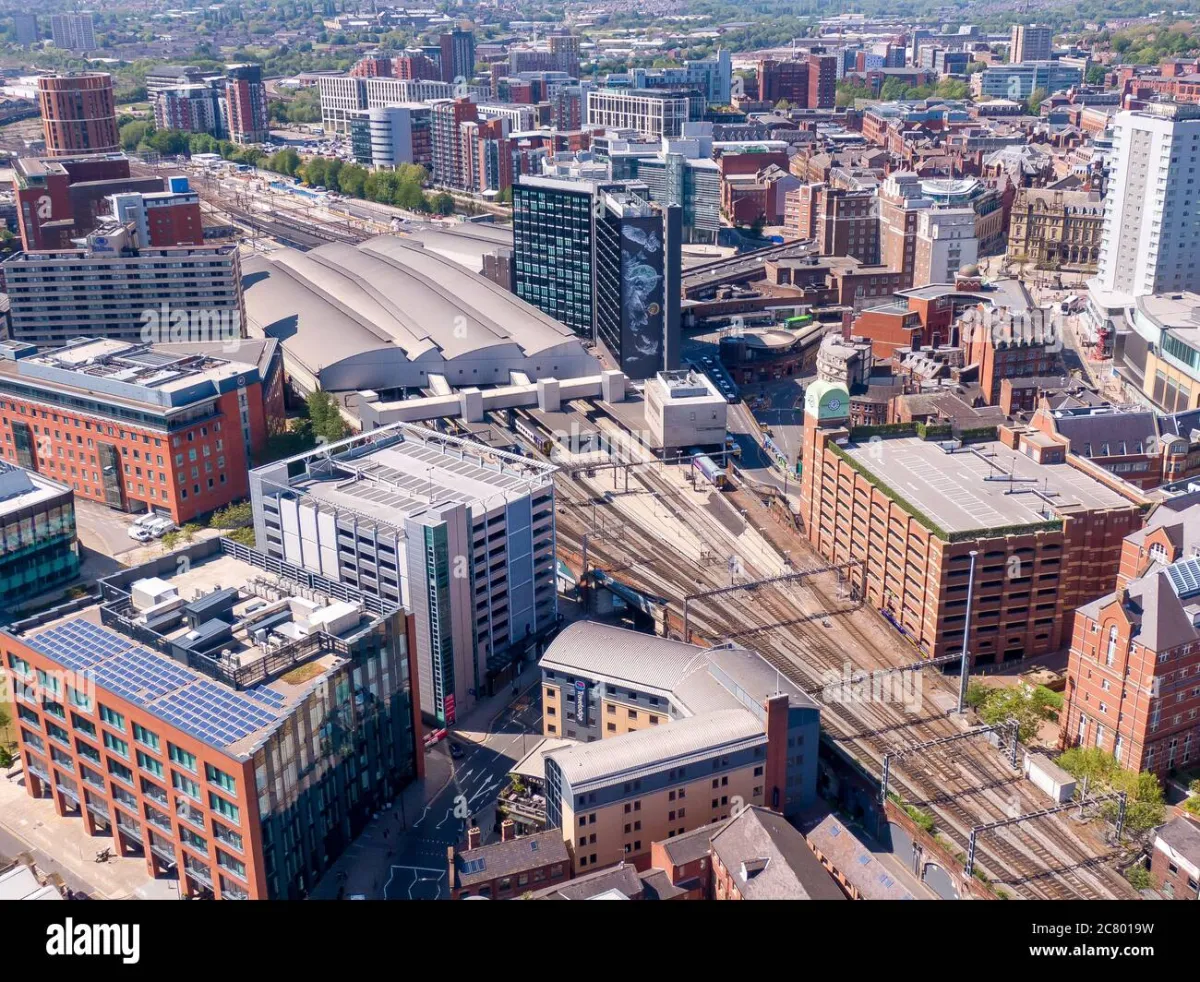 Photo: Leeds station, via c8.alamy.com
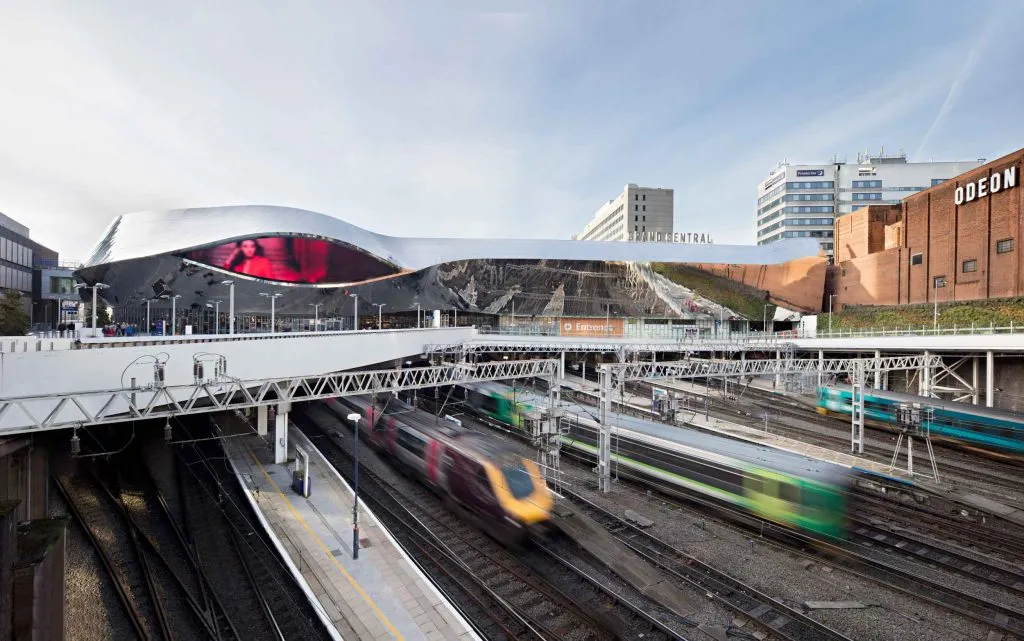 Photo: Birmingham New Street, via www.akt-uk.com
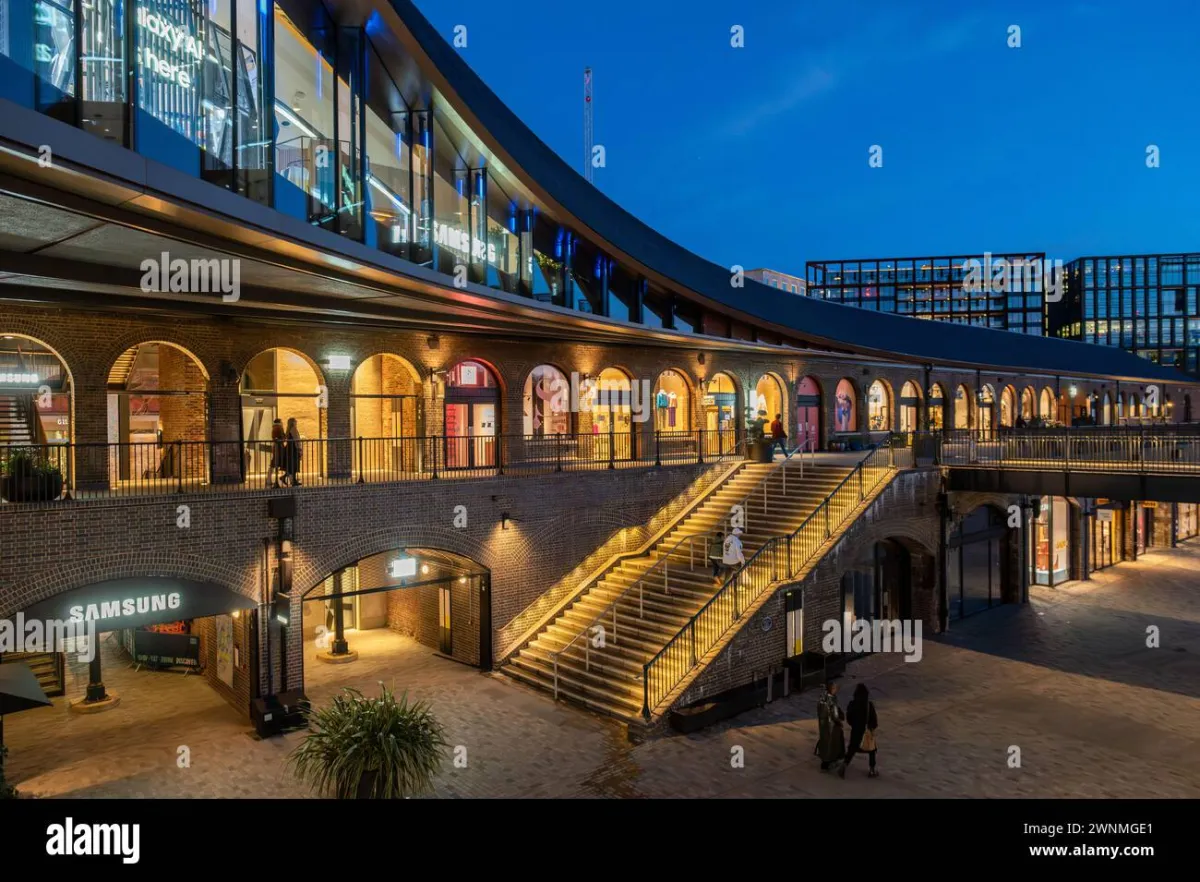 Photo: King's Cross, via c8.alamy.com
Guerrilla Orchestras and Flash Mob Theology
Beyond the solo busk lies a more chaotic tradition: the unsanctioned group performance. Britain has a reasonably rich history of guerrilla musical interventions in public transit spaces — flash mob choirs that assembled without warning in the middle of commuter rush hour, chamber ensembles that set up in ticket halls and played until security arrived, brass bands that appeared on concourses and refused to acknowledge that anything unusual was happening.
The motivations behind these interventions vary. Some are straightforwardly political — reclaiming public space from the logic of transit efficiency and commercial advertising. Some are promotional, though the ones that work best are the ones that don't feel promotional. Some are simply the result of musicians with a van, instruments, and a willingness to see what happens.
What they share is an understanding that the train station's specific social contract — the implicit agreement that everyone present is just passing through, that this is a non-place rather than a destination — makes it uniquely susceptible to disruption. When music appears in a space where music isn't supposed to be, it lands differently. The commuter who would scroll past a concert announcement on their phone stops dead when a string quartet sets up next to the WHSmith.
The Bureaucratic Muse
It would be remiss not to acknowledge the role that official obstruction has played in shaping this tradition. Network Rail and its predecessors have never been what you'd call enthusiastic patrons of the musical arts. Permit applications are complicated, enforcement is inconsistent, and the general institutional attitude towards unsanctioned performance has historically ranged from suspicious to actively hostile.
This, paradoxically, has been good for the music. The threat of removal creates urgency. The knowledge that you might be shut down at any moment concentrates the performance in ways that a fully licensed residency simply doesn't. Some of the most memorable station performances in recent British musical history have been memorable precisely because of their precariousness — the sense that this might end at any second, so it had better be worth it right now.
There's a whole aesthetic built around this impermanence. Music that exists fully in the moment because it has no choice. Performances that can't be repeated because the conditions that created them were specific and unrepeatable. The station as a space where music happens despite everything, rather than because of it.
The Next Train Departs
Britain's railway stations are changing. Redevelopment, commercial pressure, and the general drive towards retail-optimised transit environments mean that the acoustic and social conditions that made these spaces musically interesting are being systematically erased. New stations are designed for throughput, not resonance. The Victorian terminuses that created those extraordinary reverb fields are being subdivided and commercialised.
But the tradition persists, in fragments. In the busker who's found a pitch with perfect natural delay. In the choir that assembles without announcement and dissolves before anyone official can respond. In the ambient musician who records a whole album using nothing but the sounds of a single station on a Tuesday morning.
The train station was never supposed to be a venue. That's exactly why it's been such a brilliant one.